Not having symptoms does not always mean you are clear of an STI. Chlamydia and gonorrhea can both be present in the body without causing obvious signs, which is why many people do not know they are infected.
This is what makes these infections so easy to miss. You may feel completely normal, with no pain, no discharge, no itching and no visible changes, while the bacteria are still present. The infection can also still be passed on to sexual partners.
The key point is simple: symptoms are not a reliable way to know whether you have chlamydia or gonorrhea. Testing is the only way to know your status.
How common are asymptomatic chlamydia and gonorrhea?
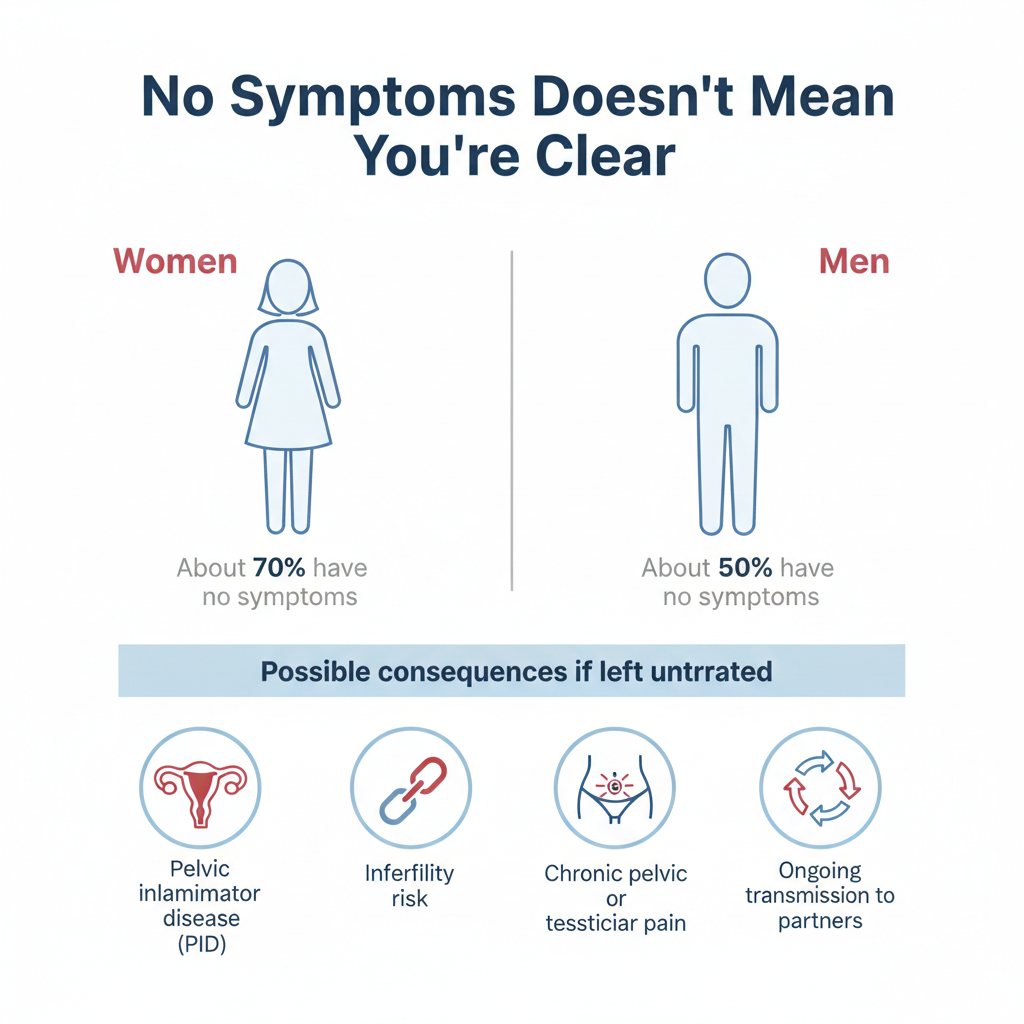
Asymptomatic chlamydia is very common. Estimates vary between studies and populations, but chlamydia is often reported to cause no symptoms in around 70% of women and around 50% of men. This means many people only find out they have it after testing.
Gonorrhea can also be silent, especially in women and in infections of the throat or rectum. Genital gonorrhea is more likely to cause noticeable symptoms in men than chlamydia, but asymptomatic infection is still possible. In the throat and rectum, gonorrhea may cause no symptoms at all or only mild irritation that is easy to ignore.
This is why waiting for symptoms can be misleading. A person can feel fine, assume everything is normal and still have an active infection.
Why no symptoms does not mean no infection
Symptoms appear when an infection irritates tissues enough for the body to send clear warning signals. But chlamydia and gonorrhea do not always trigger obvious inflammation, especially early on or when the infection is located somewhere less noticeable.
Chlamydia can infect the cervix, urethra, rectum or throat. Gonorrhea can infect the genitals, rectum and throat. If inflammation is mild, or if the infection is in the throat or rectum, there may be little or no discomfort.
The absence of symptoms is therefore not proof that the infection has cleared. It may simply mean the infection is not causing symptoms you can feel.
Symptoms that can be easy to miss
When chlamydia or gonorrhea does cause symptoms, they are not always dramatic. Some people expect STIs to cause obvious pain, sores or severe discharge, but these infections can produce much milder signs.
Possible symptoms include pain or burning when urinating, unusual discharge, pelvic discomfort, bleeding between periods, testicular pain, rectal discomfort, throat irritation or pain during sex. Some people only notice a slight change, such as more frequent urination, mild irritation or discharge that comes and goes.
These symptoms can easily be mistaken for a urinary tract infection, irritation after sex, hormonal spotting, shaving irritation, a sore throat or normal body changes. Testing is therefore important even when symptoms are mild, unclear or disappear quickly.
What can happen if chlamydia or gonorrhea is left untreated?
The main risk of an asymptomatic infection is not immediate discomfort. The bigger concern is what can happen over time if the infection is not detected and treated.
In women and people with a uterus, untreated chlamydia or gonorrhea can spread upward into the reproductive organs and contribute to pelvic inflammatory disease, often called PID. PID can damage the fallopian tubes and increase the risk of infertility, chronic pelvic pain and ectopic pregnancy.
In men and people with testes, untreated infection can sometimes spread to the epididymis, the tube involved in carrying sperm. This can cause pain, inflammation and, in some cases, fertility-related complications.
Untreated infection can also continue spreading to partners. This is one of the biggest problems with silent STIs: they can move through sexual networks because people do not know they are infected.
How testing detects silent infections
The most reliable way to detect chlamydia and gonorrhea is through nucleic acid amplification testing, often called NAAT. This type of test looks for genetic material from the bacteria, which makes it useful even when symptoms are not present.
For chlamydia, the test detects Chlamydia trachomatis. For gonorrhea, it detects Neisseria gonorrhoeae. Depending on the type of exposure, testing may use a urine sample, vaginal swab, rectal swab or throat swab.
This matters because infection can occur in different body sites. If exposure was oral or anal, urine testing alone may not detect an infection in the throat or rectum.
Why you should test even without symptoms
Testing without symptoms is not overreacting. For chlamydia and gonorrhea, it is often the only way to catch infections that would otherwise go unnoticed.
The Chlamydia & Gonorrhea Test is the most relevant option if you specifically want to check for these two common bacterial STIs. It can help detect infection even when you feel completely normal, making it useful after possible exposure, before a new relationship or when symptoms are mild and unclear.
If you want a broader sexual health check, STD Panel 4 or STD Panel 7 may be more suitable. These panels screen for multiple sexually transmitted infections and can be useful when you want wider coverage rather than testing for chlamydia and gonorrhea alone.
The important thing is to choose a test that matches your exposure and your reason for testing. Feeling fine should not be the only thing you rely on.
When should you test?
You should consider testing if you have had unprotected sex, a new partner, multiple partners, a partner who tested positive, or symptoms that are mild or unclear. Testing can also be useful before starting a new sexual relationship, especially if both partners want clarity.
For many people, testing around 1 to 2 weeks after possible exposure is more reliable than testing immediately. Testing too early may sometimes lead to a false negative because there may not be enough bacterial material to detect yet.
If you test positive and receive treatment, follow-up guidance may depend on your situation, symptoms and risk of reinfection. Many guidelines recommend retesting after a few months because reinfection can happen.
Frequently Asked Questions
Can chlamydia or gonorrhea go away on its own?
It is not reliable to assume either infection will clear on its own. Both can persist and may cause complications if untreated. Testing and appropriate treatment are the safest approach.
Can I still transmit chlamydia or gonorrhea without symptoms?
Yes. Asymptomatic infections can still be transmitted. This is one of the main reasons regular testing matters.
How soon should I test after exposure?
Testing is often more reliable around 1 to 2 weeks after possible exposure. If you test very early and the result is negative, retesting may be needed if there is ongoing concern.
Should I test my throat or rectum too?
Testing should match the type of exposure. If you have had oral or anal sex, throat or rectal swabs may be needed because urine testing may not detect infections at those sites.
Conclusion
Feeling normal does not always mean you are clear. Chlamydia and gonorrhea can be present without symptoms, still spread to partners and still cause long-term complications if left untreated.
Because symptoms are unreliable, testing is the only way to know your status. Detecting infection early helps protect your health, reduce the risk of complications and prevent unknowingly passing the infection to someone else.
Disclaimer: This article is for educational purposes only and does not constitute medical advice. Always consult with a healthcare professional before making changes to your health regimen.